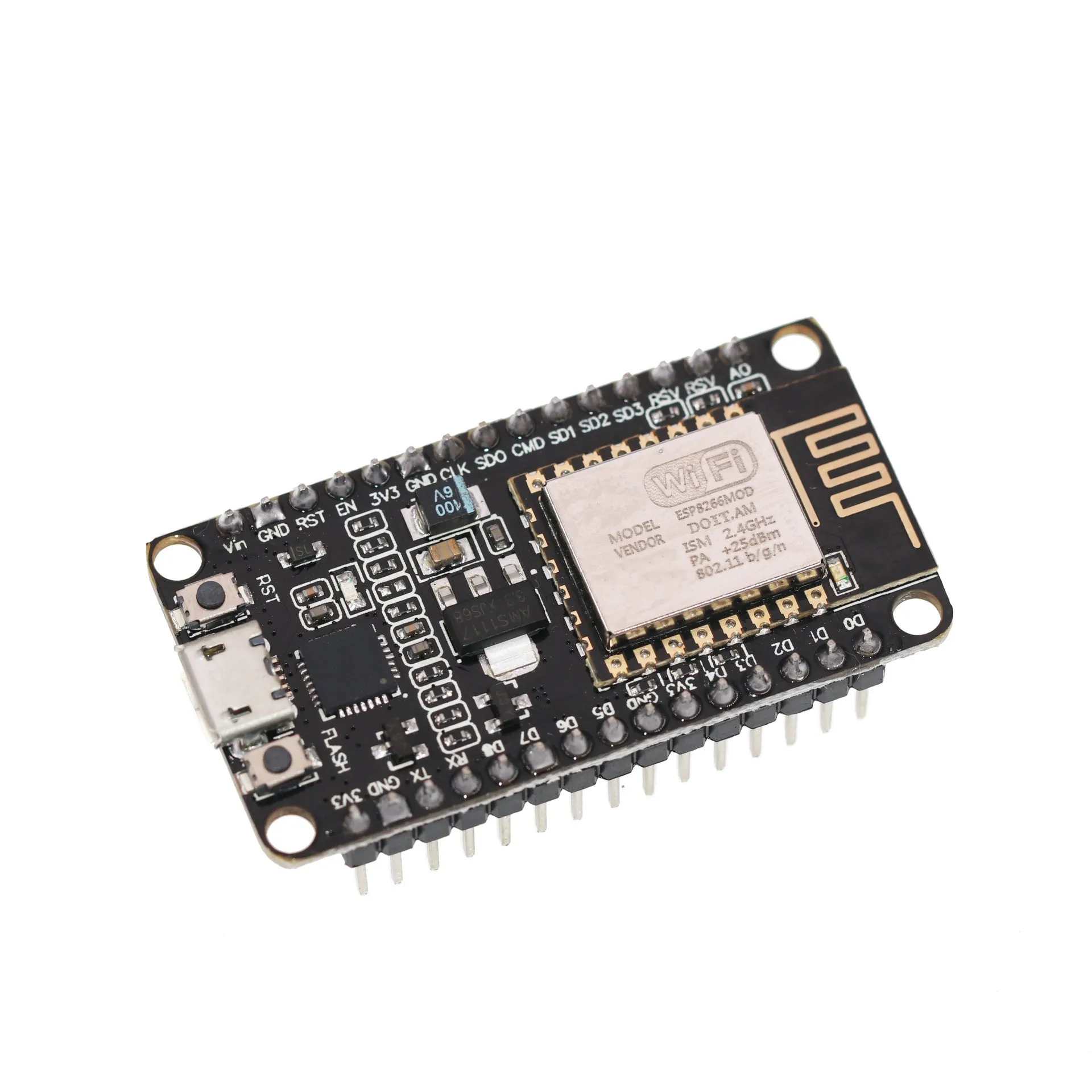
NodeMcu Lua WIFI Development Board with ESP8266 MCU uses CH340G USB interface for Arduino-like hardware IO programming in interactive Lua script with Nodejs-style network API and event-driven applications on compact 5mm*5mm chip


NodeMcu Lua WIFI Development Board with ESP8266 MCU uses CH340G USB interface for Arduino-like hardware IO programming in interactive Lua script with Nodejs-style network API and event-driven applications on compact 5mm*5mm chip
NodeMcu Lua WIFI Development Board with ESP8266 MCU and CH340G USB Interface

The NodeMcu Lua WIFI Development Board offers an open-source platform centred on the ESP8266 microcontroller, providing Wi-Fi connectivity for Internet of Things projects. This development board uses the CH340G USB interface chip for reliable computer communication, replacing the CP2102 variant mentioned in some documentation. It enables interactive programming in Lua script with hardware IO control similar to Arduino environments, making it accessible for both beginners and experienced developers working on connected devices. The board's event-driven network API follows Nodejs patterns, facilitating efficient application development for IoT scenarios. As a low-cost solution with simple setup requirements, it accelerates prototyping processes without compromising on functionality for educational, hobbyist, or professional use cases.
Features and Construction
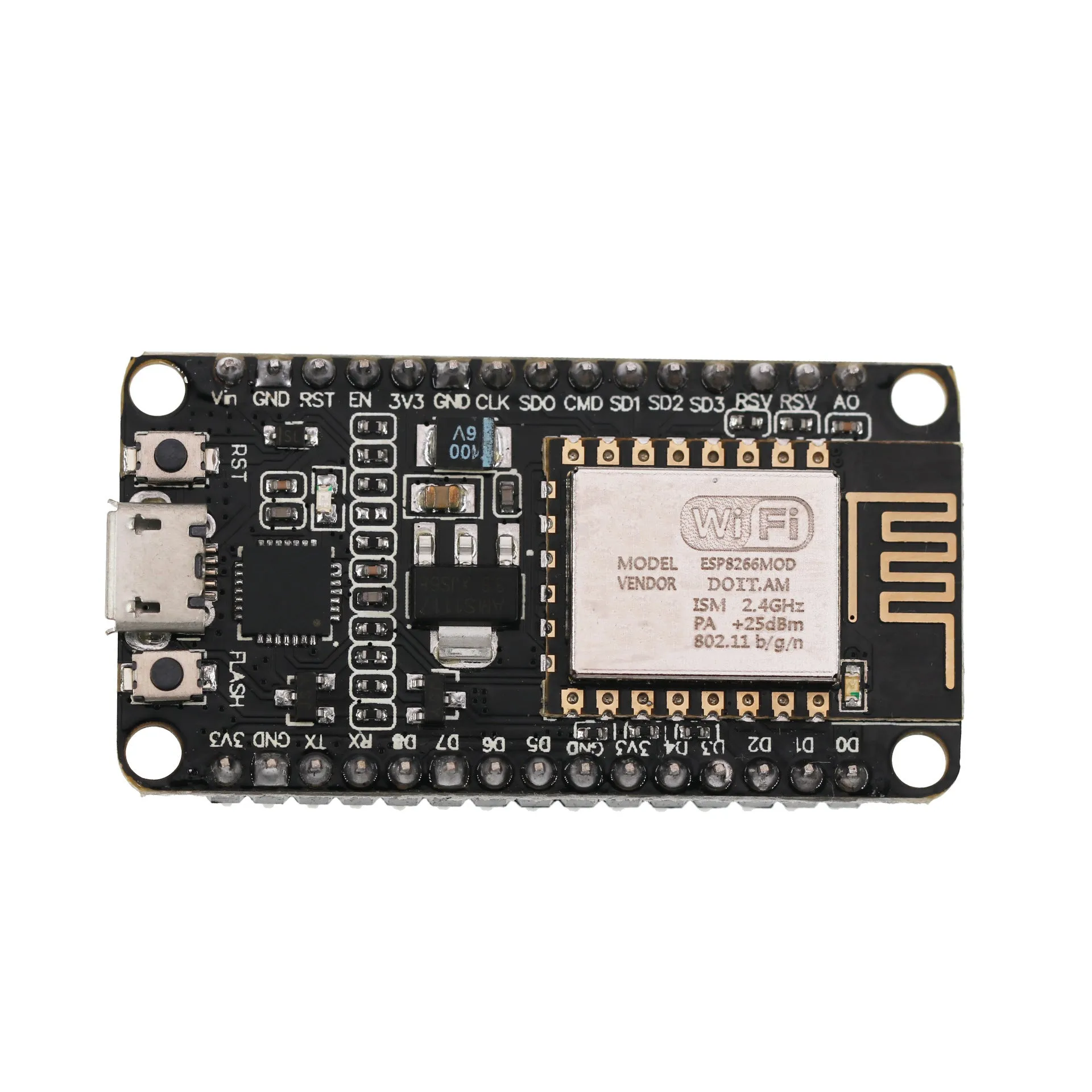
The NodeMcu development board incorporates several key features that distinguish it from basic microcontroller platforms. Its construction focuses on providing comprehensive IoT development capabilities while maintaining accessibility through familiar programming paradigms.
Material and Build
The board features standard printed circuit board construction with the ESP8266 microcontroller at its centre. This 5mm by 5mm chip provides both processing power and integrated Wi-Fi connectivity in a compact package. The CH340G USB interface chip handles communication between the development board and computers, offering reliable data transfer for programming and debugging. Surface-mount components populate the board to minimise size while providing necessary supporting circuitry. The overall build prioritises functionality for development purposes rather than aesthetic considerations, with exposed pins for easy hardware connection.
Size and Practical Fit
The ESP8266 microcontroller's compact 5mm by 5mm dimensions make the overall development board suitable for space-constrained projects. This small footprint allows incorporation into prototype designs without requiring excessive enclosure space. The board's standard form factor includes accessible GPIO pins for connecting sensors, actuators, and peripheral devices. Hardware IO capabilities mirror those available in Arduino environments, enabling straightforward migration of existing projects to Wi-Fi connected versions. The physical layout supports both breadboard prototyping and permanent installation in finished projects with appropriate mounting considerations.
Uses and Placement

This development board serves multiple application areas ranging from educational projects to professional IoT deployments. Its balanced feature set supports various implementation scenarios depending on developer requirements and project complexity.
Event or Professional Use
The NodeMcu board supports professional IoT development through its event-driven network API, which facilitates code organisation for complex applications. Developers can create network applications using Nodejs-style programming patterns, reducing learning curves for those familiar with web development. The board's capability to run code on the compact ESP8266 MCU in this style accelerates development processes for commercial products. Professional applications might include smart home devices, industrial monitoring systems, or commercial sensor networks where Wi-Fi connectivity and reliable performance are essential. The platform's open-source nature allows for customisation and integration into existing development workflows.
Everyday Home Use
For hobbyists and home developers, the board provides an accessible entry point to IoT projects with its Arduino-like programming environment. Interactive Lua scripting enables real-time experimentation without extensive compilation processes, supporting educational exploration of electronics and programming concepts. Home automation projects benefit from the Wi-Fi connectivity and hardware control capabilities, allowing creation of custom smart devices. The low-cost nature of the platform makes it suitable for multiple projects or classroom settings where budget considerations are important. Simple setup requirements mean developers can focus on application logic rather than complex configuration procedures.
Benefits and Buying Value

The NodeMcu development board offers specific advantages for developers seeking capable IoT platforms without excessive complexity or cost. These benefits translate to practical value across different user scenarios and project requirements.
Reuse and Low Maintenance
The board's design emphasises reuse through standard programming interfaces and hardware connections. Lua script programming allows code modification and adaptation without complete rewrites, supporting iterative development approaches. The advanced API for hardware IO reduces redundant configuration work when changing between projects or adding new features. Minimal maintenance requirements stem from the reliable CH340G USB interface and robust ESP8266 microcontroller, which typically function without frequent troubleshooting. This practical durability supports extended project lifecycles and reduces time spent on platform management rather than application development.
Why Choose This Product
Developers should consider this NodeMcu board when seeking a balanced IoT development platform with Wi-Fi connectivity and accessible programming. The combination of interactive Lua scripting and Arduino-like hardware control reduces learning barriers while providing professional-grade capabilities. The Nodejs-style network API offers modern development patterns familiar to web programmers transitioning to embedded systems. Compared to more complex development environments, this board provides focused functionality for connected devices without unnecessary features that increase cost or complexity. Its open-source nature ensures community support and extensive documentation for troubleshooting and advanced applications.