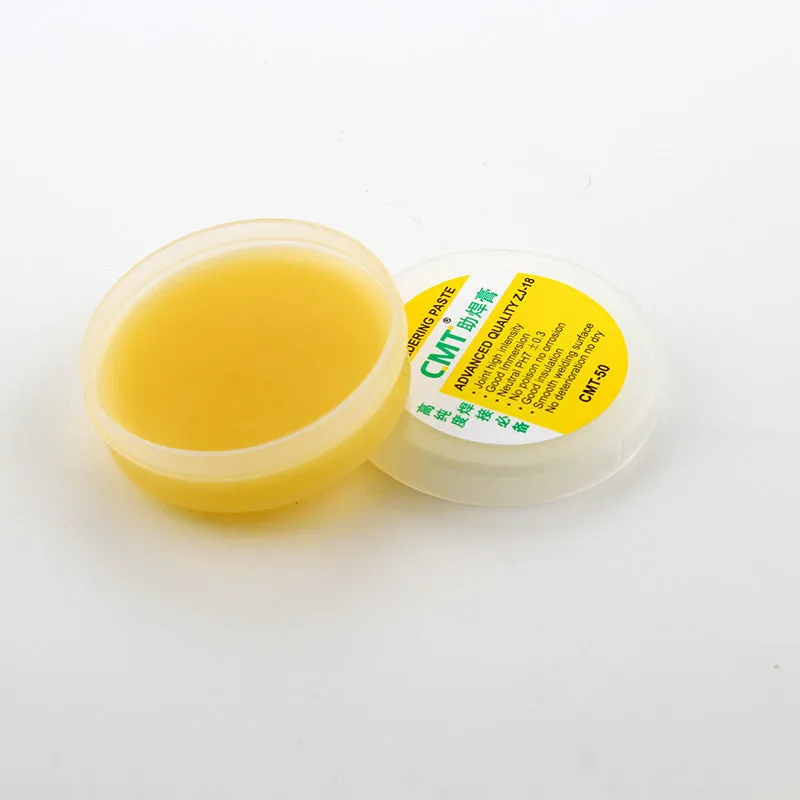
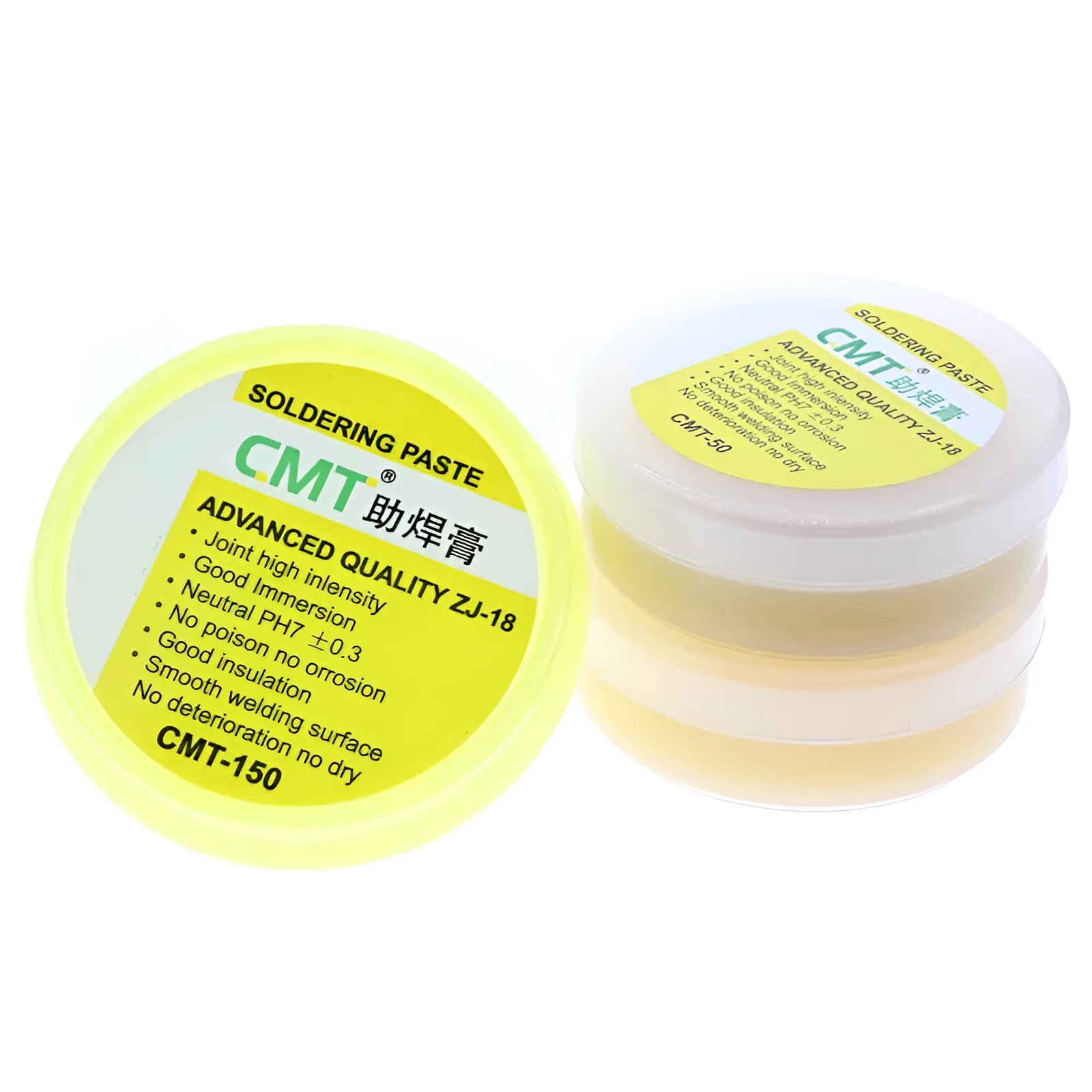
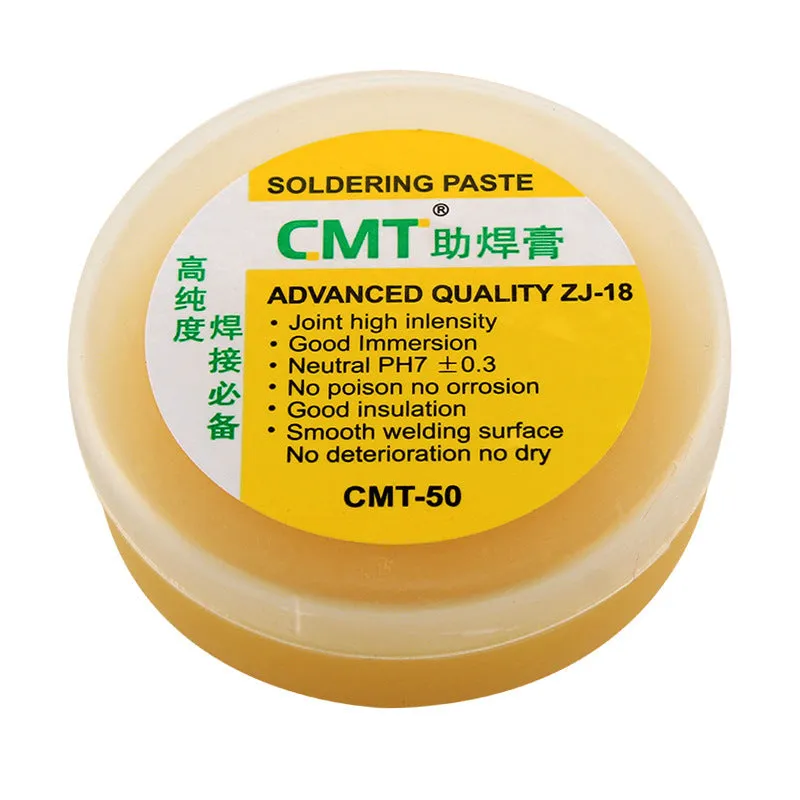
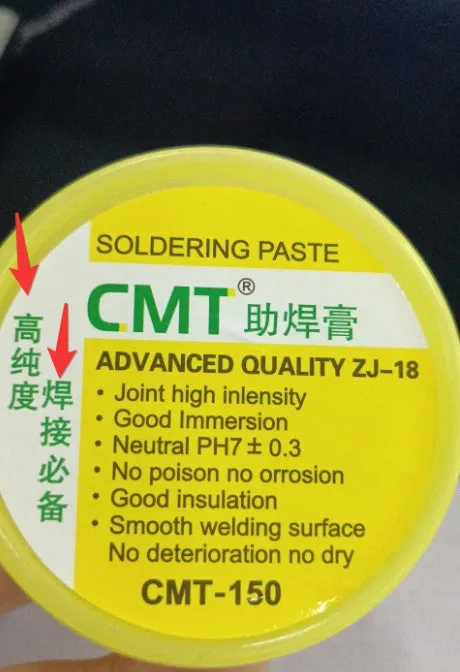
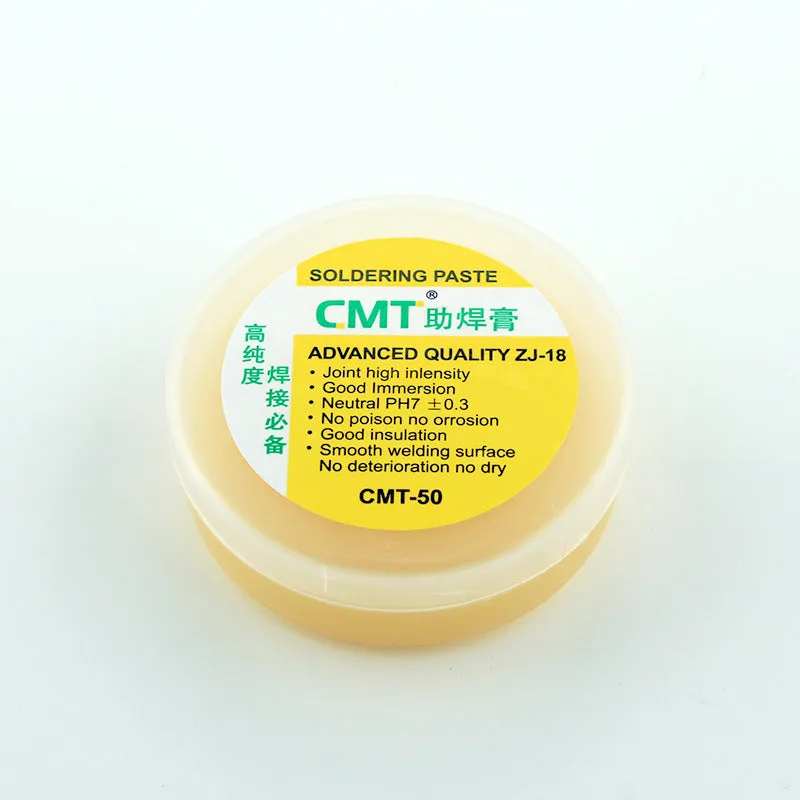
High purity rosin block soldering flux for electric soldering iron, available in two formats: CMT-50 paste flux (50g) and CMT-150 paste flux (85g), designed for manual soldering iron welding auxiliary applications, operating temperature range 280-380°C.


High purity rosin block soldering flux for electric soldering iron, available in two formats: CMT-50 paste flux (50g) and CMT-150 paste flux (85g), designed for manual soldering iron welding auxiliary applications, operating temperature range 280-380°C.
High purity rosin block soldering flux for electric soldering iron applications in 50g and 85g formats

This soldering flux product offers practical support for manual welding tasks using electric soldering irons. Available in two distinct weight options, the rosin-based formulation is designed to operate effectively within a specific temperature window. The product serves as a welding auxiliary material, addressing basic soldering requirements across various electrical and electronic repair, assembly, and maintenance scenarios where controlled flux application is necessary.
Features and Construction
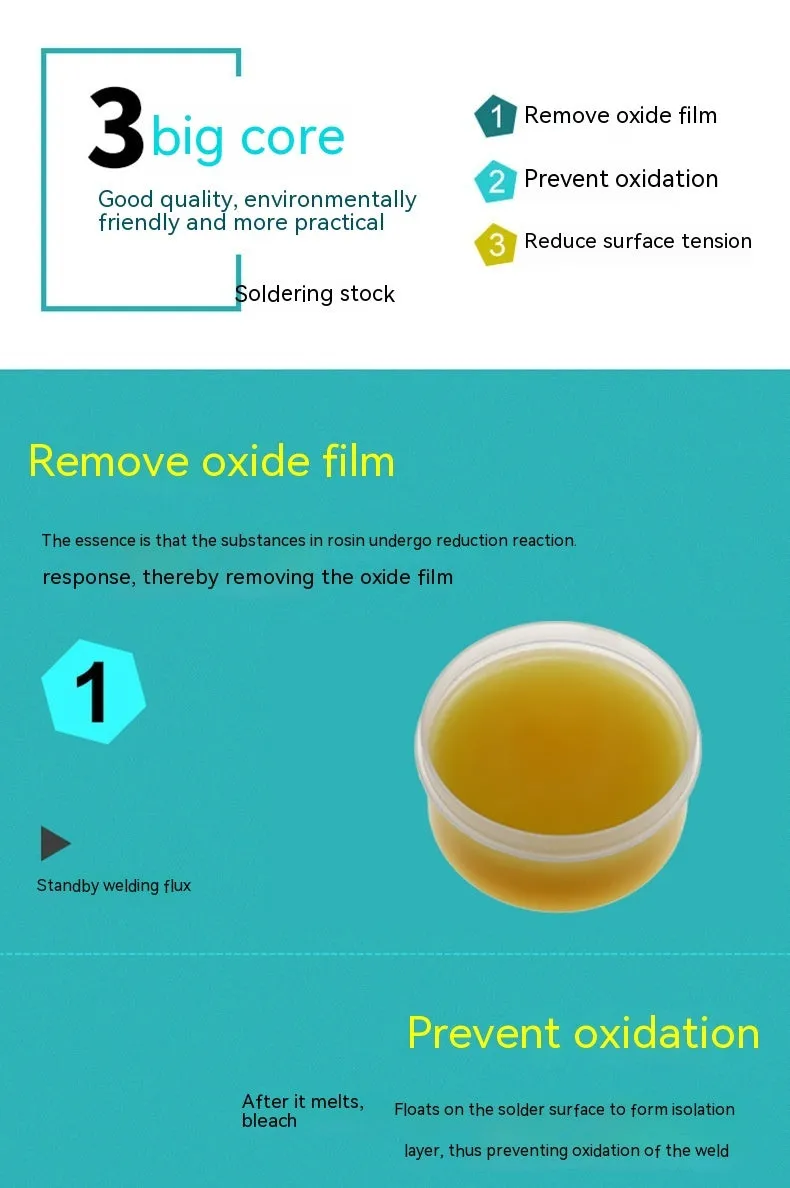
The soldering flux comes in a paste form with a high purity rosin base material. Two format options provide flexibility for different usage volumes and project scales, allowing users to select between the 50g and 85g containers based on their anticipated needs.
Material and Build
The flux utilises a rosin block formulation described as high purity, though no specific purity percentages or chemical composition details are provided. The paste consistency is designed for manual application with soldering irons, offering a practical material that supports the soldering process without requiring specialised application tools beyond the soldering iron itself.
Size and Practical Fit
Two weight options cater to different usage requirements: the CMT-50 format contains 50g of paste flux, while the CMT-150 format contains 85g. These quantities provide measurable differences in product volume without inventing specific duration or coverage claims. The containers are designed to hold the specified weights of flux material for straightforward storage and access during soldering work.
Uses and Placement

This soldering flux is intended for electric soldering iron welding auxiliary applications, functioning as a support material rather than a standalone product. Its design focuses on manual soldering operations where controlled temperature application is possible and desirable for the specific soldering task at hand.
Event or Professional Use
In professional repair environments, maintenance scenarios, or small-scale production settings, this flux supports soldering tasks requiring manual control. The specified temperature range of 280-380°C provides operational parameters for technicians and repair specialists working on electrical components, circuit boards, or electronic assemblies where rosin flux is appropriate for the materials being joined.
Everyday Home Use
For hobbyists, DIY enthusiasts, or home repair situations involving electrical work, this flux offers a practical solution for soldering tasks. The temperature guidance helps users operate within effective parameters, while the two format sizes allow selection based on project frequency and scale—from occasional small repairs to more regular hobbyist activities requiring soldering assistance.
Benefits and Buying Value
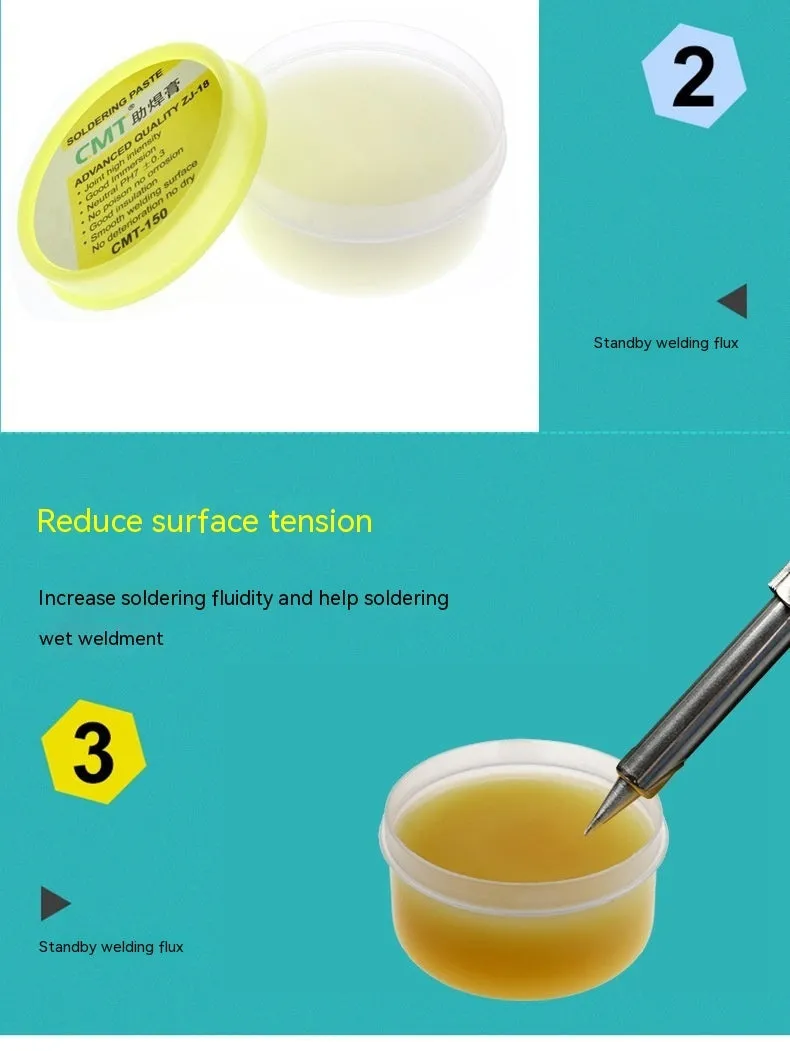
The product provides measurable differences in quantity through its two format options, allowing users to match their purchase to anticipated usage levels. The clear temperature specifications offer practical guidance for effective application, while the rosin base material represents a common formulation for soldering applications where its properties are suitable.
Reuse and Low Maintenance
The container format allows for multiple uses from a single purchase, with the sealable design helping to preserve the paste between applications. No specialised storage conditions beyond basic cool, dry placement are required, and the material does not demand complex preparation or mixing before use—simply application within the specified temperature range during soldering operations.
Why Choose This Product
This soldering flux offers clear format choices with measurable weight differences, allowing users to select based on their specific quantity needs. The specified temperature range provides practical operating guidance rather than vague suggestions, and the product focuses on its core function as a welding auxiliary without inventing expanded capabilities beyond supporting electric soldering iron use. The high purity description, while not quantified, indicates attention to material selection within the stated formulation approach.