
Wind Car DIY Electronic Kit Science Toys for Children's Educational Experiments and Creative Invention Projects with Acrylic Metal Plastic Construction Measuring 7.7cm x 10cm x 8.2cm


Wind Car DIY Electronic Kit Science Toys for Children's Educational Experiments and Creative Invention Projects with Acrylic Metal Plastic Construction Measuring 7.7cm x 10cm x 8.2cm
Wind Car DIY Electronic Kit: Build a Functional Model for Hands-On Science Experiments
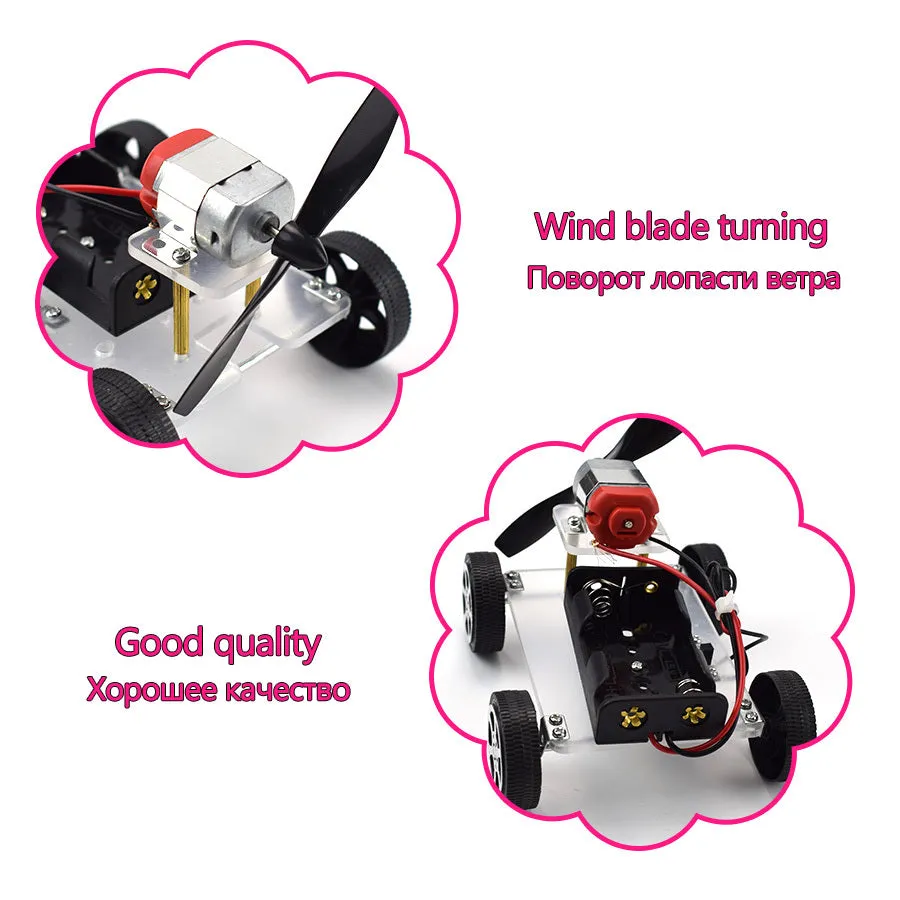
This Wind Car DIY Electronic Kit offers a practical entry into creative physics and early scientific learning through active model construction. Designed as an educational toy, it provides all the necessary acrylic, metal, and plastic components to assemble a complete, battery-powered wind car, encouraging problem-solving and cognitive skill development. The process of building the functional model from individual parts serves as a direct experiment in mechanics and simple electronics, making theoretical concepts tangible. With a compact finished size, it is a focused project that results in a working vehicle ideal for demonstration and further exploratory play.
Features and Construction

The kit is defined by its hands-on assembly approach and the specific materials used to create a complete, functioning model. Each element is chosen for its role in the final construction, providing a realistic building experience.
Material and Build
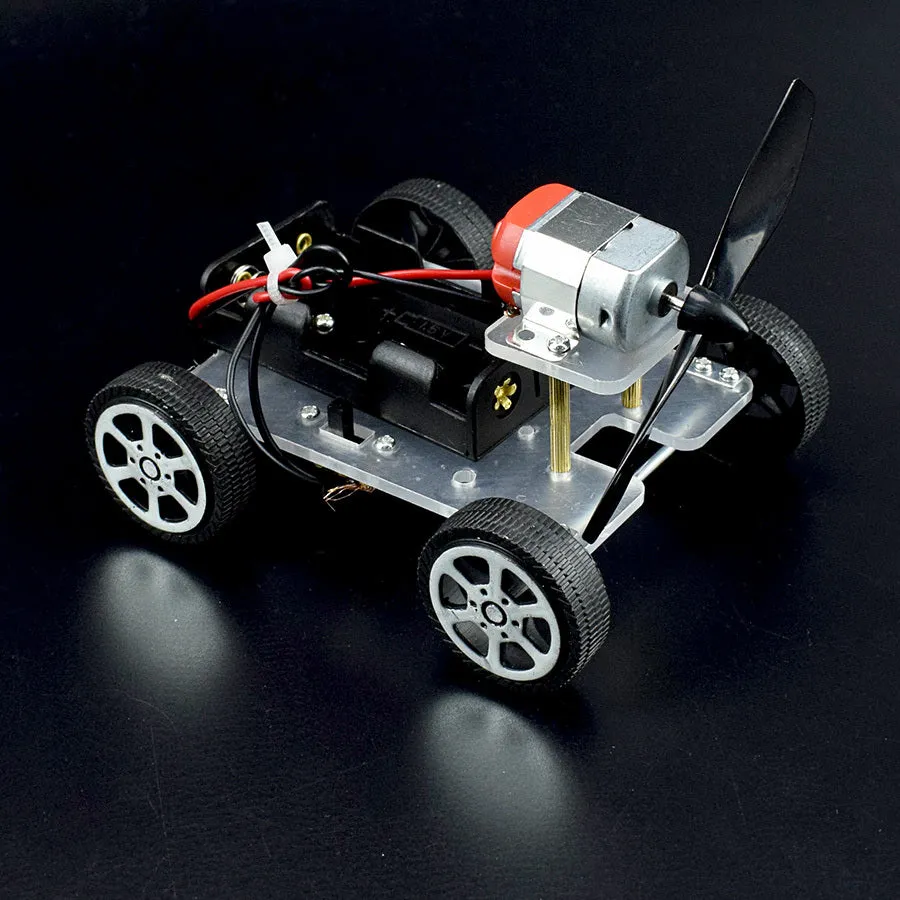
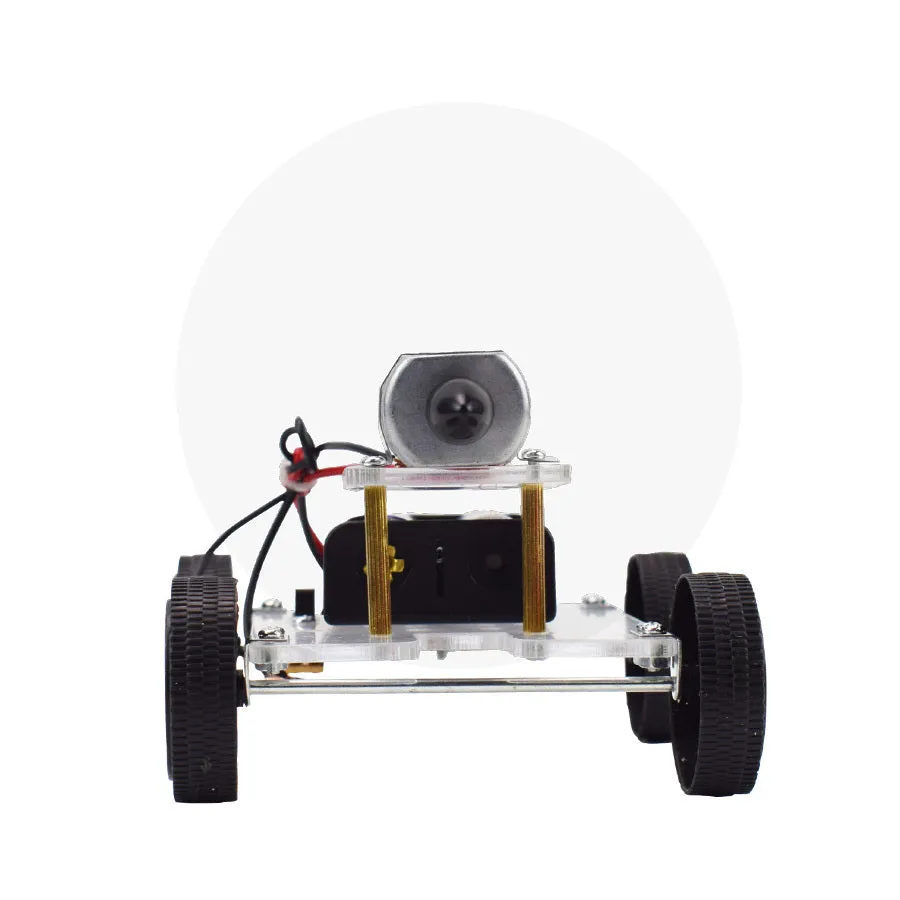
The model incorporates three primary materials: acrylic for the main structural body panels, metal for essential electronic contacts and mechanical axles or fittings, and plastic for various connectors, housings, and detail parts. This combination allows for a durable yet manageable construction process suitable for educational settings. The assembly requires fitting these components together, which demonstrates basic principles of engineering and electronics in a practical, tangible way.
Size and Practical Fit
Once fully assembled, the wind car model measures 7.7 cm in length, 10 cm in width, and 8.2 cm in height. This compact size makes the finished product portable and easy to use on a tabletop or floor for experiments. The scale is suitable for demonstrating aerodynamic and propulsion concepts without requiring excessive space, and the proportions are designed for stable operation when powered by the included battery recommendation.
Uses and Placement
This kit is designed for educational engagement, bridging the gap between theoretical learning and practical application. It fits into both structured learning environments and casual home exploration.
Event or Professional Use
In classroom, workshop, or club settings, this kit serves as a standardised project for teaching fundamentals of physics, such as energy conversion (wind to motion), basic circuitry, and mechanical assembly. The consistent outcome—a working wind car—allows for comparative experiments and group learning activities. Educators can use it to demonstrate scientific methods, from hypothesis to construction and testing.
Everyday Home Use
At home, the kit provides a focused, screen-free activity that culminates in a child-owned working model. It encourages independent following of instructions, fine motor skill development through assembly, and creative thinking about modifications or further experiments. The completed car can be used repeatedly to explore the effects of different battery strengths or fan designs, extending its play value beyond a single build session.
Benefits and Buying Value
The value of this product lies in its direct application of educational principles and the reusable nature of the completed model. It provides a concrete outcome from the learning process.
Reuse and Low Maintenance
The finished wind car model is designed for repeated use. With standard AA batteries as the recommended power source, it can be run multiple times for demonstrations or play. The acrylic, metal, and plastic construction is intended to withstand the normal handling associated with a demonstration model. Its simple design means there are few parts that can wear out under typical educational use conditions.
Why Choose This Product
This kit is chosen for its specific focus on building a complete, functional wind-powered vehicle from component parts, which is less common than static models. The inclusion of the electronic elements and the recommended battery provision means the experiment moves from passive assembly to active demonstration. The defined dimensions and material list provide a clear, manageable project scope with a guaranteed tangible result, making it a reliable tool for introducing engineering concepts.
