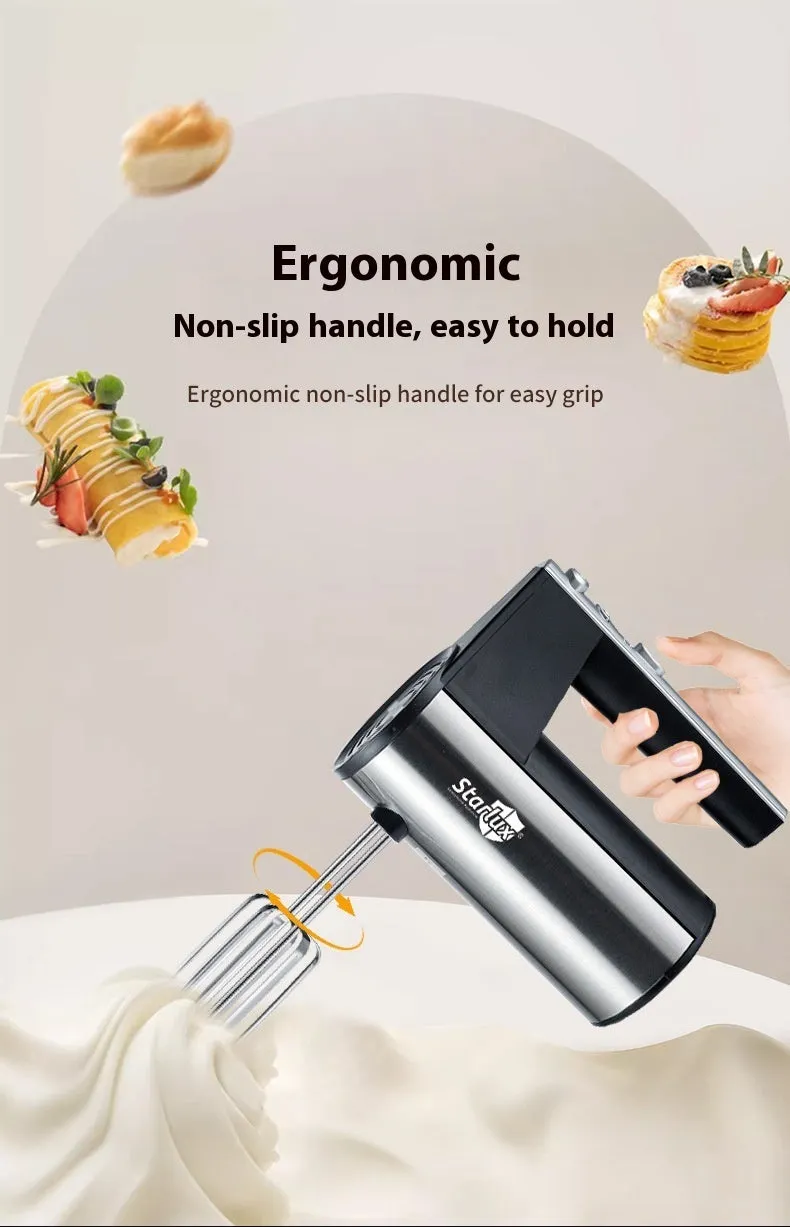
Household Electric Whisk Hand-held Mixer with 500W Power and 5 Speed Settings for Baking, Mixing Batters, and Whipping Cream, Available in SL-25209 Colour with Dual Voltage 110V US & 220V EU Standard


Household Electric Whisk Hand-held Mixer with 500W Power and 5 Speed Settings for Baking, Mixing Batters, and Whipping Cream, Available in SL-25209 Colour with Dual Voltage 110V US & 220V EU Standard
500W Household Electric Hand Mixer with 5 Speeds for Baking and Dual Voltage Support
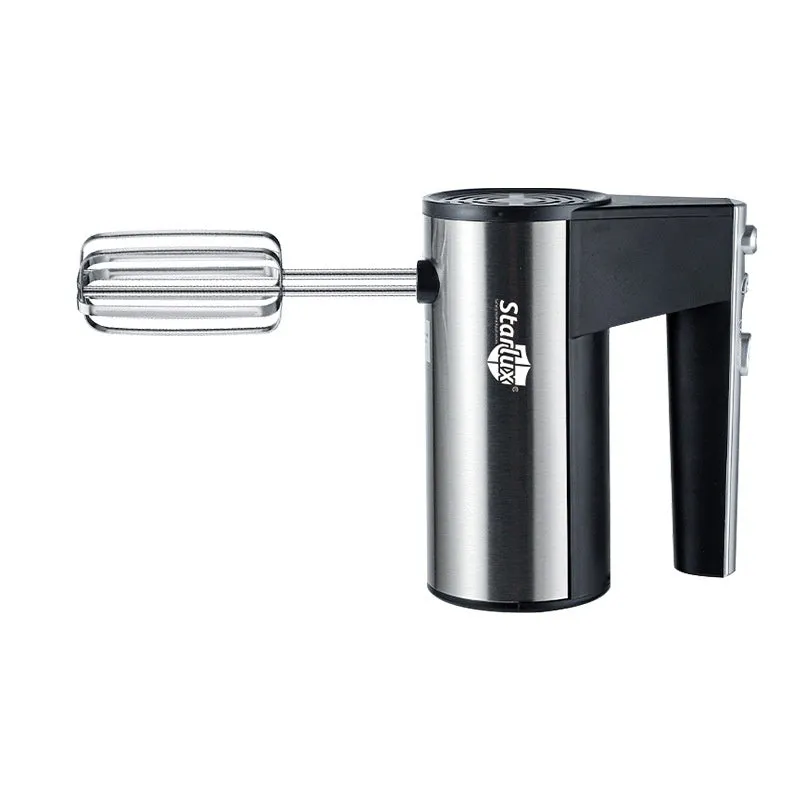
This handheld electric mixer is designed for the home baker, combining a practical 500W motor with versatile five-speed control. It handles fundamental baking tasks like beating eggs to a froth, thoroughly mixing cake and bread batters, and whipping cream to the desired consistency. The unit's key technical feature is its broad voltage compatibility, rated from 111V to 240V, which specifically accommodates both the 110V US standard and the 220V EU standard. This makes it a suitable choice for users in different regions or those who may relocate. Available in the SL-25209 colour, it comes ready for immediate use straight from the box.
Features and Construction
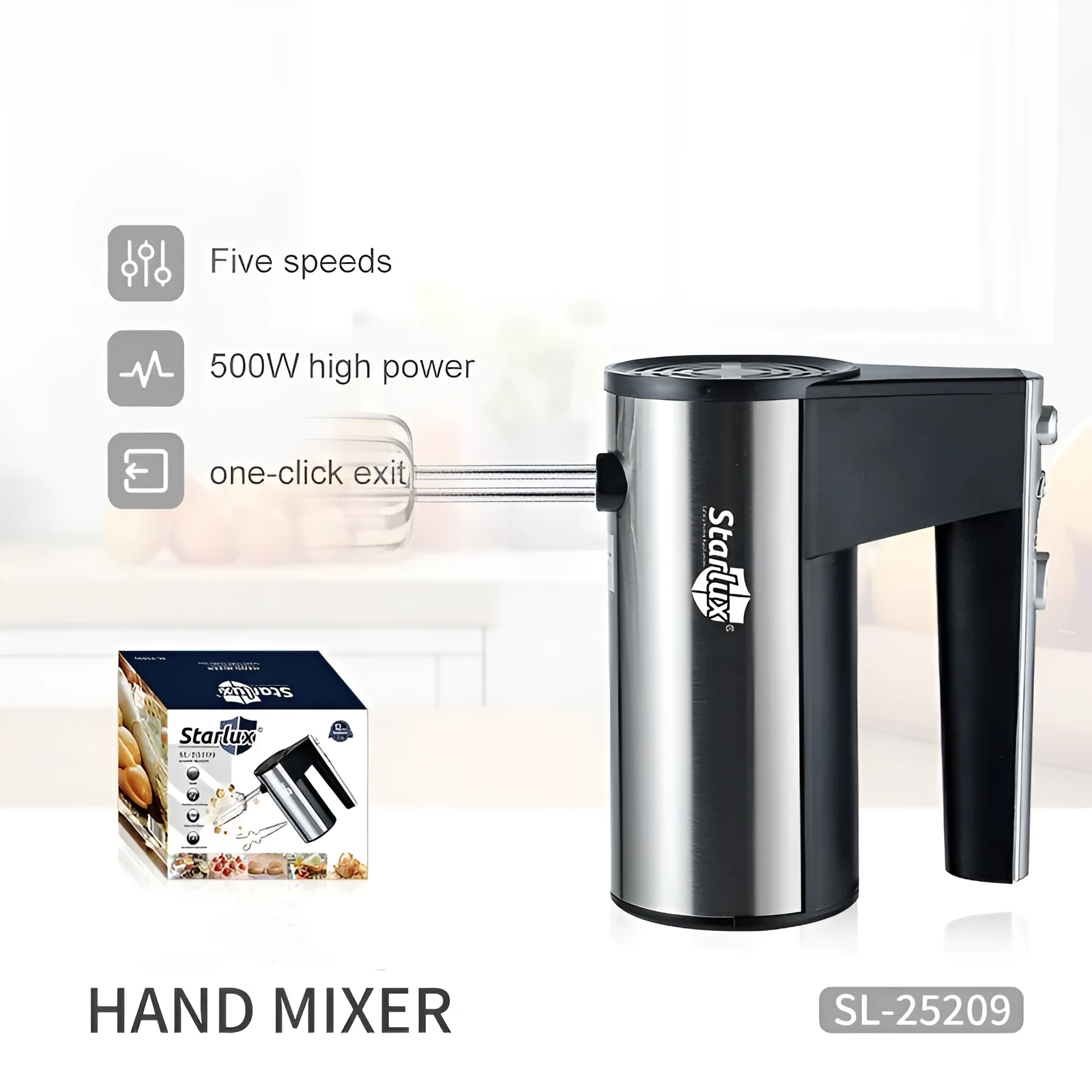
The mixer's functionality is built around its core specifications: a 500W power rating and a five-speed gear selector. This combination provides the necessary torque for mixing dense batters while offering the flexibility for lighter tasks like whipping egg whites.
Material and Build
The construction follows the standard for handheld electric mixers, with a lightweight plastic housing that contains the 500W motor and speed control circuitry. The beaters are typically made from stainless steel or a food-grade metal alloy, designed to be durable for repeated use with various food ingredients. The build prioritises a balance between weight for comfortable handheld use and sturdiness to manage the motor's power during operation.
Size and Practical Fit
As a handheld appliance, its size is designed to be comfortably held in one hand while the other guides the bowl. The lack of specific dimensional data in the source suggests a compact, standard form factor that fits easily in a kitchen drawer or can be stored on a countertop. Its primary fit is functional, being suitable for standard mixing bowls and jugs used in home kitchens.
Uses and Placement

The product is explicitly defined for household use, focusing on baking-related tasks. Its handheld nature dictates its method of use, offering direct involvement in the mixing process rather than a stand-alone, hands-free operation.
Event or Professional Use
While designed for the household, its 500W power and five-speed settings make it capable of handling the volume and variety of mixing required for larger home baking projects, such as preparing for parties or seasonal baking. It is not presented as a commercial-grade tool, but its specified functions cover the core needs of enthusiastic home bakers.
Everyday Home Use
For daily or weekly kitchen use, this mixer simplifies common tasks. It efficiently beats eggs for omelettes or pancakes, mixes batter for weekend cakes or muffins, and whips cream for desserts. The speed settings allow users to start slowly to incorporate dry ingredients without creating a cloud of flour before increasing speed for thorough aeration.
Benefits and Buying Value

The value of this product lies in its specified performance features and its practical design for home kitchens, reducing manual effort for common baking preparations.
Reuse and Low Maintenance
The electric whisk is built for repeated use across many baking sessions. Maintenance is straightforward: the beaters detach for easy cleaning, and the main body only requires a wipe-down. The dual voltage capability adds to its long-term utility, as it remains functional even if the user's location changes between regions with different power standards.
Why Choose This Product
This mixer offers a clear set of capabilities for its intended user: sufficient 500W power for effective mixing, multiple speed options for control, and the convenience of handheld operation. The inclusion of both US and EU voltage standards is a practical differentiator that provides flexibility and future-proofing, which is a specific, source-supported advantage over mixers fixed to a single regional voltage.